
How to Say Nationalities in Spanish: Complete Guide

Get our free email course, Shortcut to Conversational.
Have conversations faster, understand people when they speak fast, and other tested tips to learn faster.
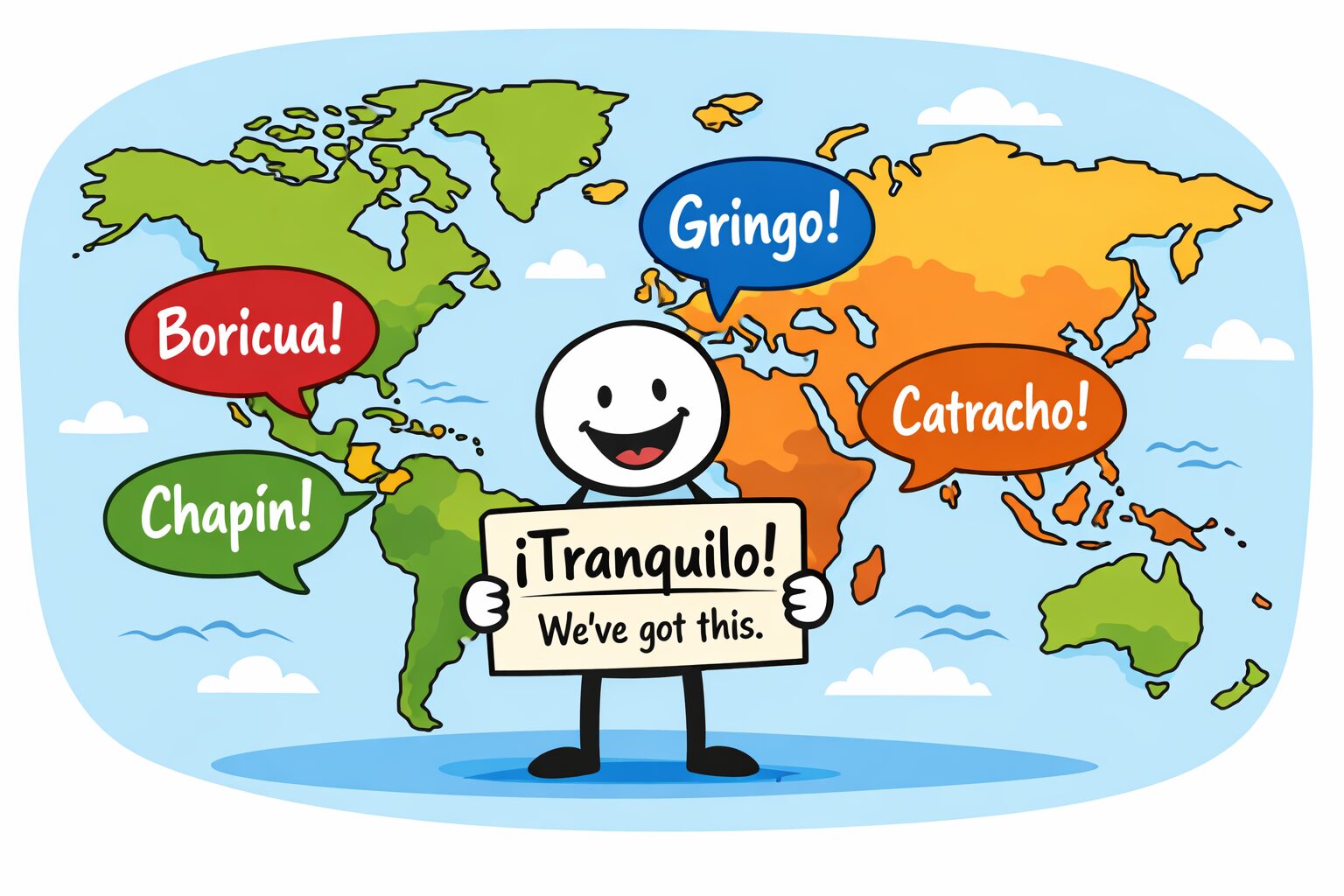
More infoLet’s be honest: trying to figure out how to say nationalities in Spanish can feel like a guessing game. Is someone from Estados Unidos called estadounidense, americano, or gringo? (Spoiler: it depends on who you ask and how much coffee they’ve had.)
The truth is, nationalities in Spanish follow patterns, but they also love to throw curveballs. One country gives you colombiano, another gives you costarricense, and then Puerto Rico casually drops boricua just to keep things interesting.
While there’s no magic formula to guess a nationality from a country name, there are clear patterns that make learning them far easier than you’d expect. In this guide, we’ll walk you through:
- The three essential grammar rules (gender, plural, and capitalization)
- A complete list of nationalities organized by common endings
- A free quiz to test your knowledge
- Fun slang terms that’ll make you sound like a local
Ready to stop guessing and start sounding like you’ve been doing this for years? Let’s go.
Basic Rules for Nationalities in Spanish
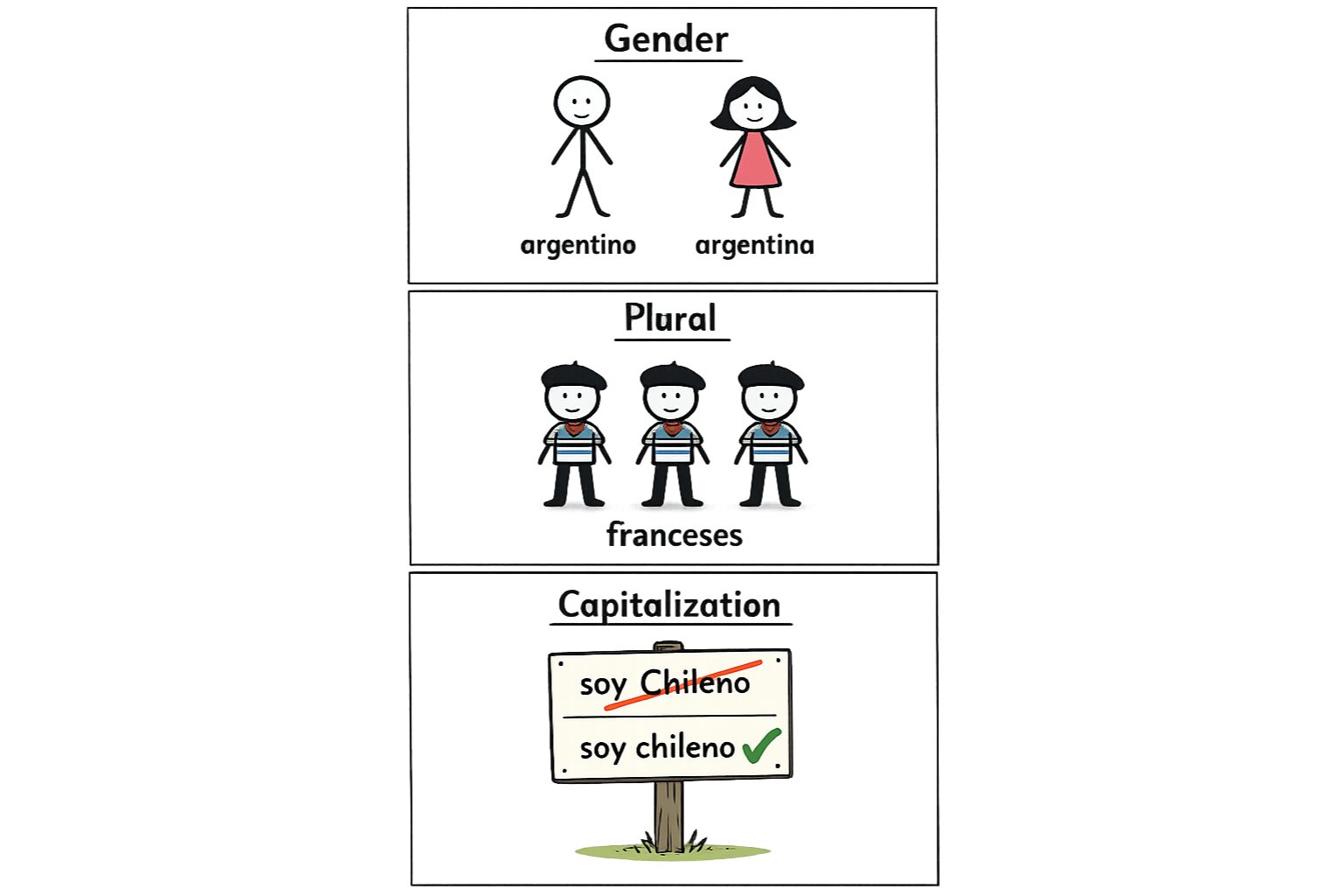
Before jumping into vocabulary, here are three key rules you need to know when learning how to say nationalities in Spanish:
1. Gender matters
Nationalities change depending on whether you’re talking about a man or a woman. Example:
- peruano → peruana
- chileno → chilena
2. Singular and plural forms change
You also need to match the number. Example:
- colombiano → colombianos
- canadiense → canadienses
3. They are not capitalized
Unlike in English, nationalities in Spanish are never capitalized.Example:
- Mexicano ✕ – mexicano ✓
List of Nationalities in Spanish
There’s no single rule for forming nationalities, but many follow recognizable patterns. Learning these will help you guess correctly more often:
-ano / -ana
| English | Spanish | Nationality |
| Germany | Alemania | alemán – alemana |
| Colombia | Colombia | colombiano – colombiana |
| Peru | Perú | peruano – peruana |
| Italy | Italia | italiano – italiana |
-ense (same for masculine and feminine)
| English | Spanish | Nationality |
| Canada | Canadá | canadiense |
| Costa Rica | Costa Rica | costarricense |
| United States | Estados Unidos | estadounidense |
| Nicaragua | Nicaragua | nicaragüense |
-eño / -eña
| English | Spanish | Nationality |
| El Salvador | El Salvador | salvadoreño – salvadoreña |
| Brazil | Brasil | brasileño – brasileña |
| Panama | Panamá | panameño – panameña |
| Puerto Rico | Puerto Rico | puertorriqueño – puertorriqueña |
-és / -esa
| English | Spanish | Nationality |
| Portugal | Portugal | portugués – portuguesa |
| France | Francia | francés – francesa |
| Finland | Finlandia | finlandés – finlandesa |
| Japan | Japón | japonés – japonesa |
-ino / -ina
| English | Spanish | Nationality |
| China | China | chino – china |
| Philippines | Filipinas | filipino – filipina |
| Argentina | Argentina | argentino – argentina |
-eno / -ena
| English | Spanish | Nationality |
| Chile | Chile | chileno – chilena |
| Slovenia | Eslovenia | esloveno – eslovena |
Once you’ve mastered how to say nationalities in Spanish, you’ll likely find yourself in conversations where people ask where you’re from, or where you’re headed next. If your travels take you through a Spanish-speaking country, you’ll want to be prepared for more than just introductions. Knowing how to ask for directions in Spanish is just as essential; you might be hunting down a restaurant recommended by a local or trying to find your way back to your hotel after a long day of exploring!
Spanish Nationalities Quiz
Fill in the blanks with the correct nationality:
- Sushi is from Japan – El sushi es __ __ __ __ __ __ __
- The Eiffel Tower is from France – La torre Eiffel es__ __ __ __ __ __ __ __
- Andy and Sally are from Australia – Ellos son __ __ __ __ __ __ __ __ __ __
- María is from Brazil – Ella es __ __ __ __ __ __ __ __
- Shakira is from Colombia – Ella es__ __ __ __ __ __ __ __ __ __
- Baseball is from the United States – Es __ __ __ __ __ __ __ __
- Mr. and Mrs. Chang are from China – Ellos son__ __ __ __ __ __
- Pizza is from Italy – Es__ __ __ __ __ __ __ __
- BMW is from Germany – Es __ __ __ __ __ __
- Tacos are from Mexico – Son__ __ __ __ __ __ __ __ __
Key:
- japones
- francesa
- australianos
- brasileña
- colombiana
- estadounidense
- chinos
- italiana
- alemán
- mexicanos/mejicanos
More practice: Complete the sentences
- Lionel Messi is from Argentina, él es ______________
- Salsa is the typical music from Puerto Rico, es __________
- Angel Falls (Salto Ángel) is the highest waterfall in the world, it is located in Venezuela, Salto Ángel es _________
- Cristiano Ronaldo is from Portugal, él es _____________
- Hockey is from Canada, es ______________
- Panama Canal is a way to connect the Caribbean Sea and Pacific Ocean, el Canal de Panamá es _________
- Haka is a traditional dance from New Zealand, es ____________
- Kimi Raikkonen is a famous Formula 1 driver, he is from Finland, él es ____________
- Manny Pacquiao is a famous boxer, he is from Philippines, él es _______________
- Machu Picchu is a touristic place in Peru, es __________
- Roger Federer is from Switzerland, él es ____________
- Pablo Neruda is from Chile, él es ____________
- Rafael Nadal is from Spain, él es ____________
Key:
- argentino.
- puertorriqueño.
- venezolano.
- portugués.
- canadiense.
- panameño.
- neozelandés.
- finlandés.
- filipino.
- peruano.
- suizo.
- chileno.
- español.
Spanish Slang for Nationalities (Gentilicios coloquiales)
While English has a few informal terms for nationalities (like “Kiwis” for people from New Zealand), Spanish takes this much further. Many countries have widely used nicknames that you’ll hear in everyday conversations.
That said, these terms are informal and sometimes context-dependent. They’re best used with people you know or in casual settings, not in formal or professional situations.
Speaking of sounding like a local, nationalities are just the beginning. Once you’ve got colombiano down, why not take it a step further? Our guide on Colombian Slang will have you chatting with paisas and rolos like you’ve lived in Medellín your whole life.
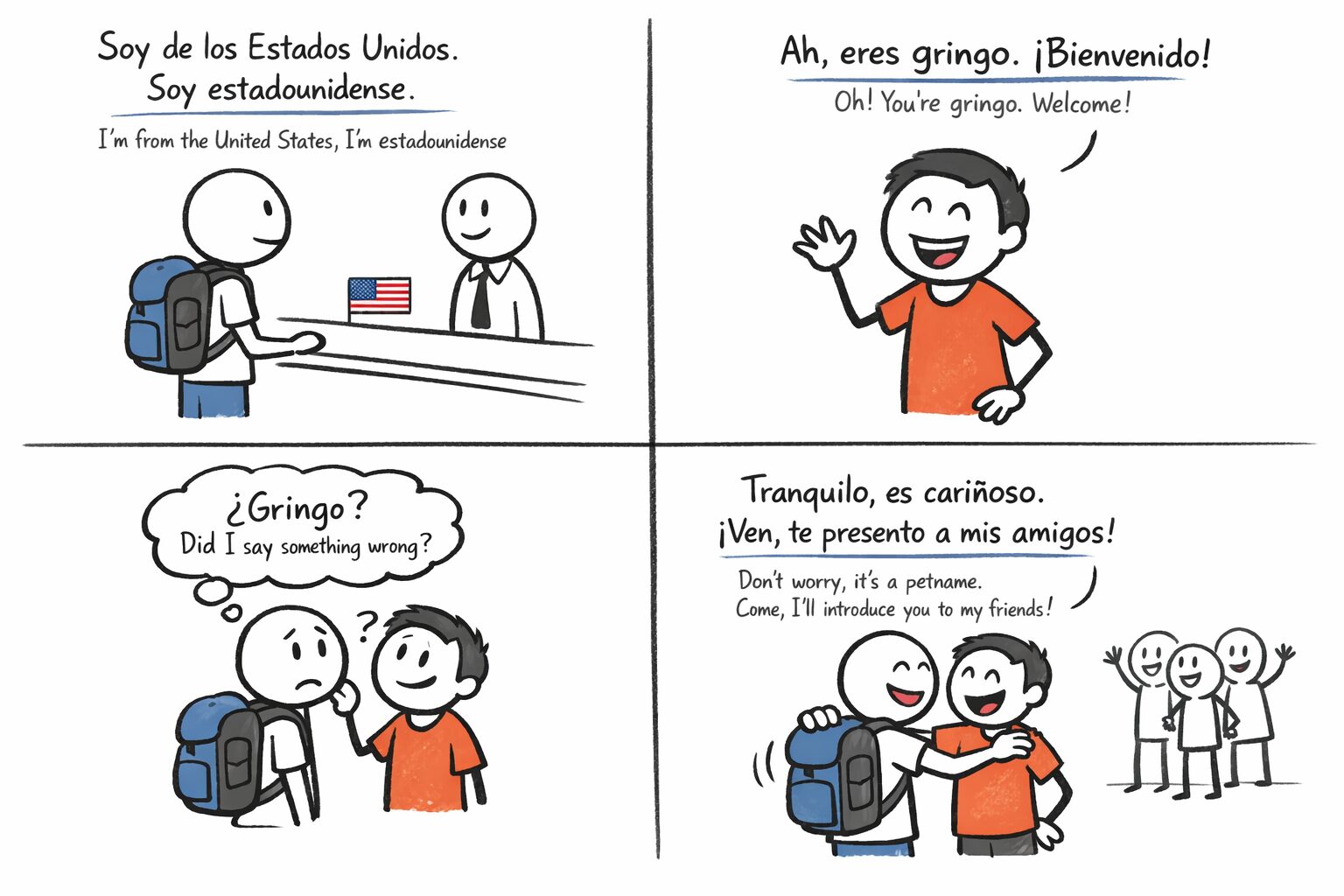
Let’s get into the good stuff. Here are the slang terms for nationalities in Spanish that textbooks won’t teach you:
| Country | Slang |
| Alemania | Teutón |
| Honduras | Catracho |
| Francia | Galo |
| Portugal | Luso |
| Antigua y Barbuda | Antiguanos |
| Suiza | Helvéticos |
| Puerto Rico | Boricua |
| Paraguay | Guaraní |
| Estados Unidos | Gringo |
| Nicaragua | Nica |
| El Salvador | Guanaco |
| Perú | Cholo Note: This term can be considered offensive in some contexts; use with caution. |
| Nueva Zelanda | Kiwi |
| Guatemala | Chapín |
| Países Bajos | Neerlandés |