


How Much vs How Many in Spanish: How to use Cuánto, cuánta, cuántos, or cuántas

Get our free email course, Shortcut to Conversational.
Have conversations faster, understand people when they speak fast, and other tested tips to learn faster.
More infoUnderstanding how much vs how many in Spanish is essential if you want to ask questions naturally and talk about quantities with confidence. In Spanish, the words cuánto, cuánta, cuántos, and cuántas are used to express “how much” or “how many,” depending on the noun they refer to.
You will hear these words all the time in everyday conversations about prices, age, time, food, and quantities. They can also be used in exclamations to emphasize surprise, excitement, or intensity. Since these expressions often go hand in hand with quantities and prices, being familiar with Spanish numbers will make them much easier to use naturally.
In this post, you will learn:
- How to use cuánto, cuánta, cuántos, and cuántas
- The difference between countable and uncountable nouns
- How to ask prices in Spanish
- How these words are used in exclamations
We will focus specifically on the accented forms, which are used as Spanish interrogatives and exclamations. Without the accent mark, these words can have different grammatical functions while still relating to quantity. This distinction is especially important when comparing forms like cuánto vs cuanto.
By the end, you will have a much clearer understanding of how much vs how many in Spanish and when to use each form correctly.
Let’s start!
Asking for Quantity
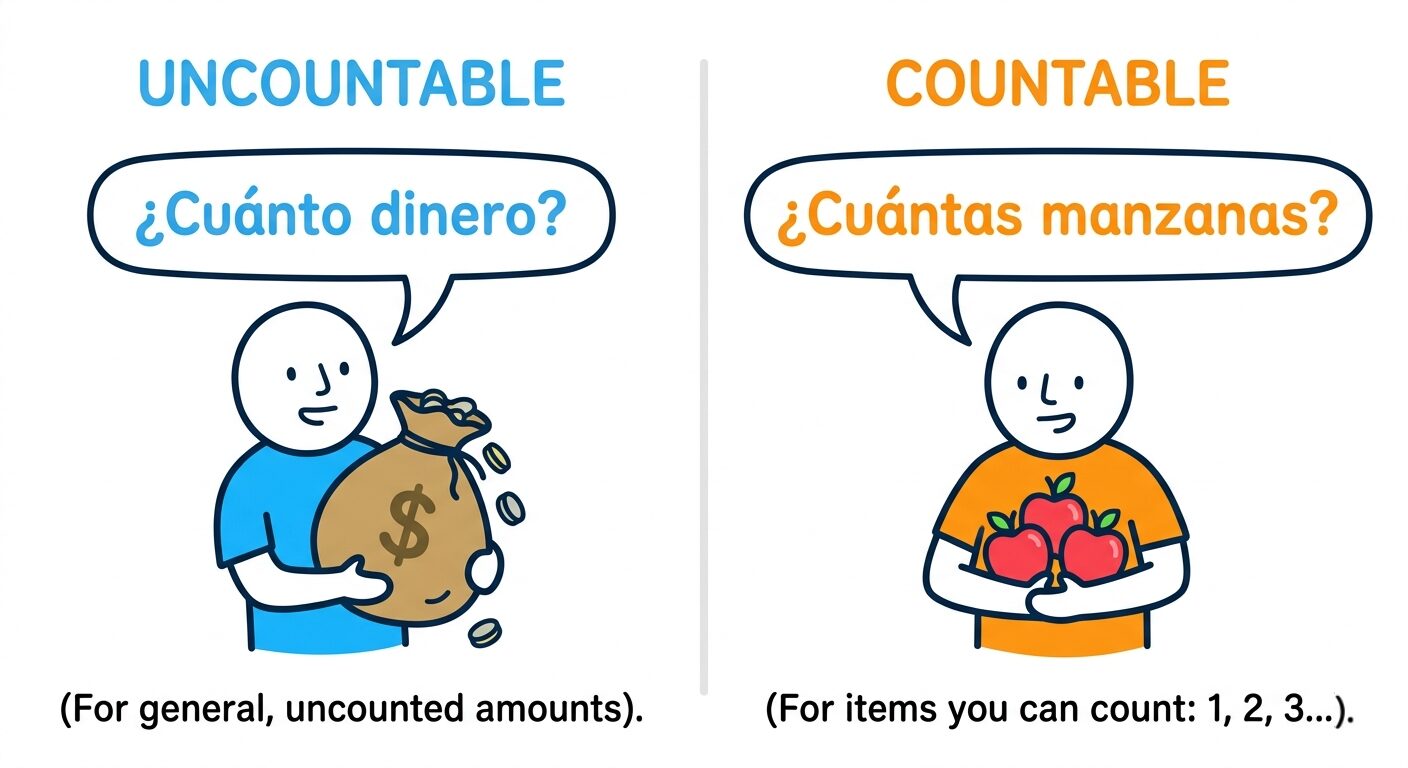
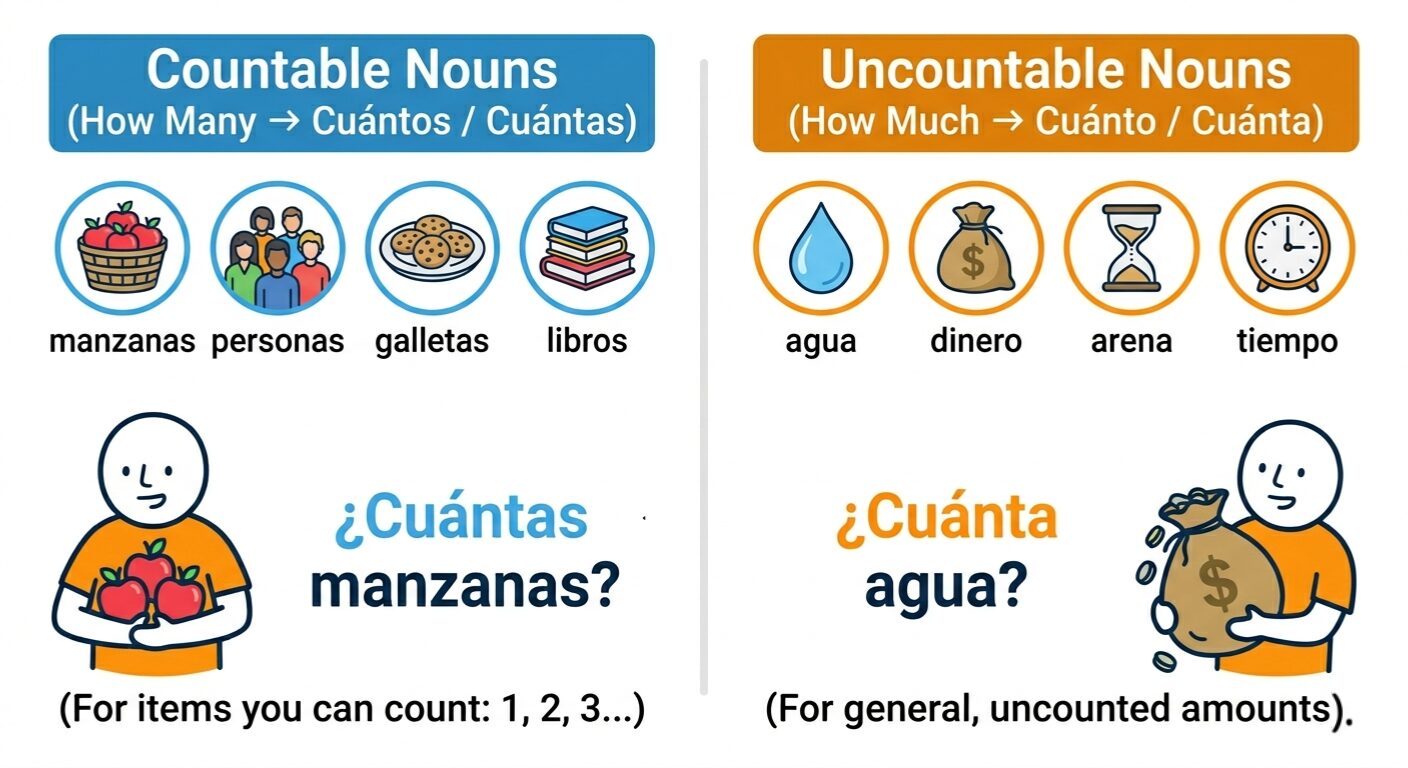
To understand how much vs how many in Spanish, you first need to know whether the noun is countable or uncountable.
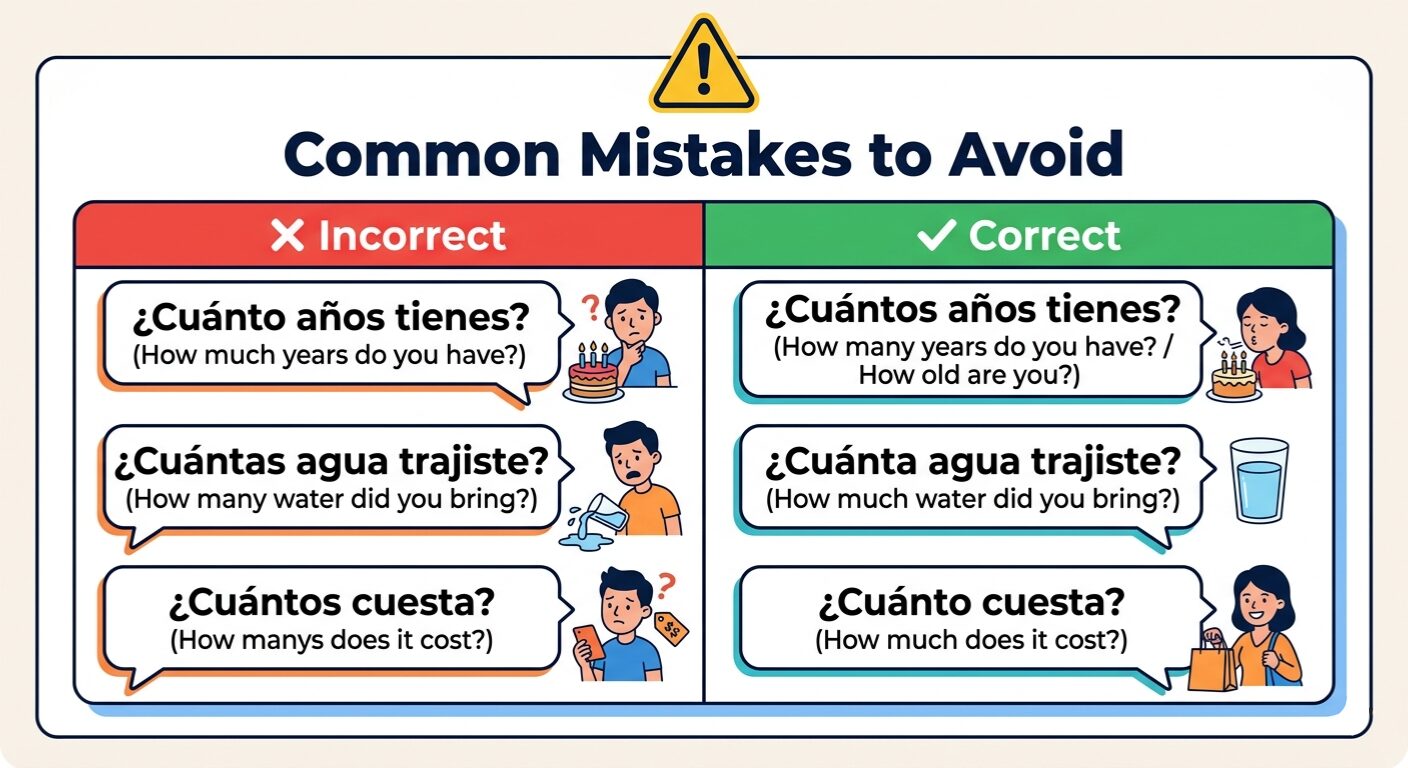
When talking about uncountable nouns like water, time, weight, or hunger, Spanish uses cuánto or cuánta. When talking about countable nouns like drinks, minutes, books, or cookies, Spanish uses cuántos or cuántas.
Fortunately, this follows the same logic as English:
- cuánto / cuánta = how much
- cuántos / cuántas = how many
You also need to match the gender of the noun:
- masculine nouns use cuánto or cuántos
- feminine nouns use cuánta or cuántas
The chart below summarizes the four forms:
| Uncountable: How Much? | Countable: How Many? | |
| Masculine | Cuánto | Cuántos |
| Feminine | Cuánta | Cuántas |
- ¿Cuánto dinero traes en la billetera? – How much money do you have in your wallet?
- ¿Cuánto tiempo tienes para terminar el informe? – How much time do you have to finish the report?
- ¿Cuánta agua trajiste para la caminata? – How much water did you bring for the hike?
- ¿Cuánta hambre tienes? – How hungry are you? → How much hunger do you have?
- ¿Cuántos años tiene tu amigo? – How old is your friend? → How many years does your friend have?
- ¿Cuántos estudiantes tienes en tu clase? – How many students do you have in your class?
- ¿Cuántas personas vienen a la fiesta? – How many people are coming to the party?
- ¿Cuántas galletas preparaste? – How many cookies did you make?
Using Cuánto Without the Noun
In some situations, we omit the nouns in the sentence, which means you’ll need to use context clues to determine the gender and number that cuánto is referring to.
Consider the following example:
- ¿Cuánto pesas? – How much do you weigh? (Native speakers would never actually say this, as it sounds very awkward.)
Even though the noun is not explicitly stated, the implied noun is peso (weight). Since peso is masculine and uncountable, we use cuánto.
This follows the same logic as English:
- “How much do you weigh?” sounds natural
- “How many do you weigh?” does not
The implied noun sounds much more natural than if we were to include it in our sentence:
- ¿Cuánto peso pesas? – How much weight do you weigh?
The same thing happens if we say:
- Solamente queda una galleta, ¿cuántas comiste? – There’s only one cookie left. How many did you eat?
Although we didn’t state the noun in the question, it’s clear from context that we’re asking “How many [cookies] did you eat?” Thus, the proper word is cuántas because it matches with galletas in both gender and number.
Asking for Prices
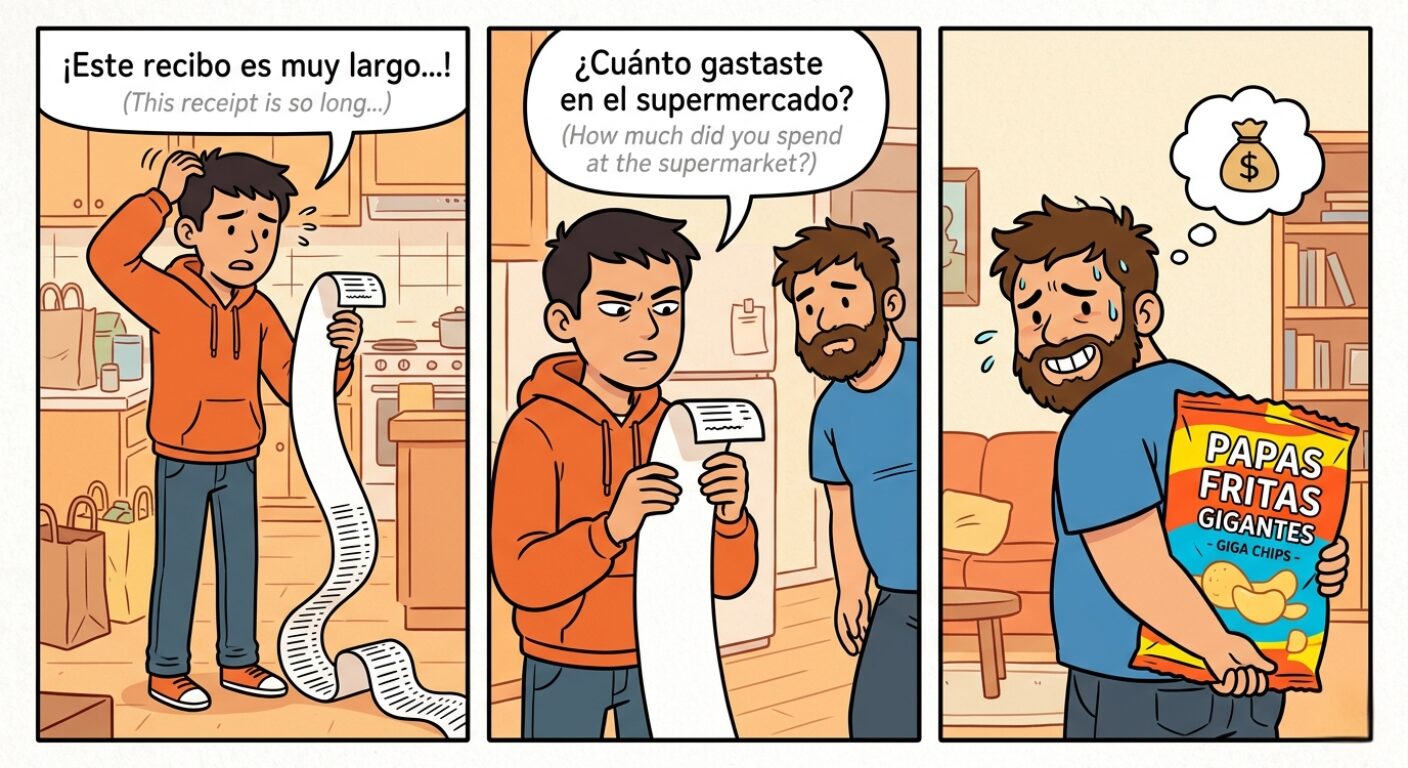
There are a couple of different ways to ask “how much does it cost?” in Spanish. Luckily, all of them use the word cuánto. This is because the Spanish words for price, money, and cost (precio, dinero, and costo) are all masculine and uncountable.
- ¿Cuánto [dinero] cuesta esa ensalada? – How much [money] does that salad cost?
- ¿Cuánto cuestan los zapatos negros? – How much do the black shoes cost?
- ¿Cuánto vale el tiquete de avión? – How much is the plane ticket worth?
- ¿Cuánto valen los aretes de oro? – How much are the gold earrings worth?
Likewise, to ask about the total price of something, you can simply ask:
- ¿Cuánto es? – How much is it?
As an Exclamation
Another way to use cuánto, cuánta, cuántos, and cuántas is in exclamations. Beyond helping you understand how much vs how many in Spanish, these words are also used to emphasize surprise, excitement, concern, happiness, or intensity.
This works similarly to expressions with qué, such as “¡qué calor!” meaning essentially, “it’s so hot!”
- ¡Cuánto tiempo sin verte! ¡Estás muy alta! – How long it’s been since I’ve seen you! You’re so tall! → It’s been so long since I’ve seen you! You’re so tall!
In this scenario, the word cuánto can be best understood in English as an expression of the idea it creates rather than a direct translation. The phrase “it’s been so long” rather than “how long it’s been” is a more accurate, natural way to express this same idea in English.
- Here are some other examples to help you grasp this idea:
- ¡Cuánta basura en esta calle! No se puede ni caminar. – There’s so much garbage on this street! You can’t even walk.
- ¡Samuel, cuántos zapatos! Compraste toda la tienda. – Samuel, so many shoes! You bought the whole store.
- ¡Cuántas sorpresas! Ha sido un cumpleaños maravilloso. – So many surprises! It’s been a wonderful birthday.
You will hear expressions like these all the time in everyday Spanish, especially in emotional or animated conversations. Many similar phrases appear in common Spanish exclamations and interjections, where small words can completely change the tone and intensity of what someone is saying.
Conclusion
Mastering how much vs how many in Spanish becomes much easier once you stop thinking of cuánto, cuánta, cuántos, and cuántas as separate vocabulary words and start seeing them as patterns. The key is simply identifying whether the noun is countable or uncountable, and then matching the correct gender and number.
The more exposure you get to these forms in real conversations, the more natural they will start to feel. You will hear them constantly when talking about prices, time, age, food, quantities, and reactions, so learning to recognize them in context is just as important as memorizing the rules!
It is also worth paying close attention to accent marks. While the accented forms are used in questions and exclamations, the unaccented versions follow different grammatical rules and can change the meaning of a sentence entirely. Understanding the difference between the two is an important step toward sounding more natural and confident in Spanish, especially when comparing forms like Cuanto, Cuanta, Cuantos, and Cuantas: Without The Accent.
With enough practice, choosing between cuánto, cuánta, cuántos, and cuántas will start to feel automatic rather than something you have to stop and think about.