


Question Words in Spanish Made Easy: How to Ask Anything

Get our free email course, Shortcut to Conversational.
Have conversations faster, understand people when they speak fast, and other tested tips to learn faster.
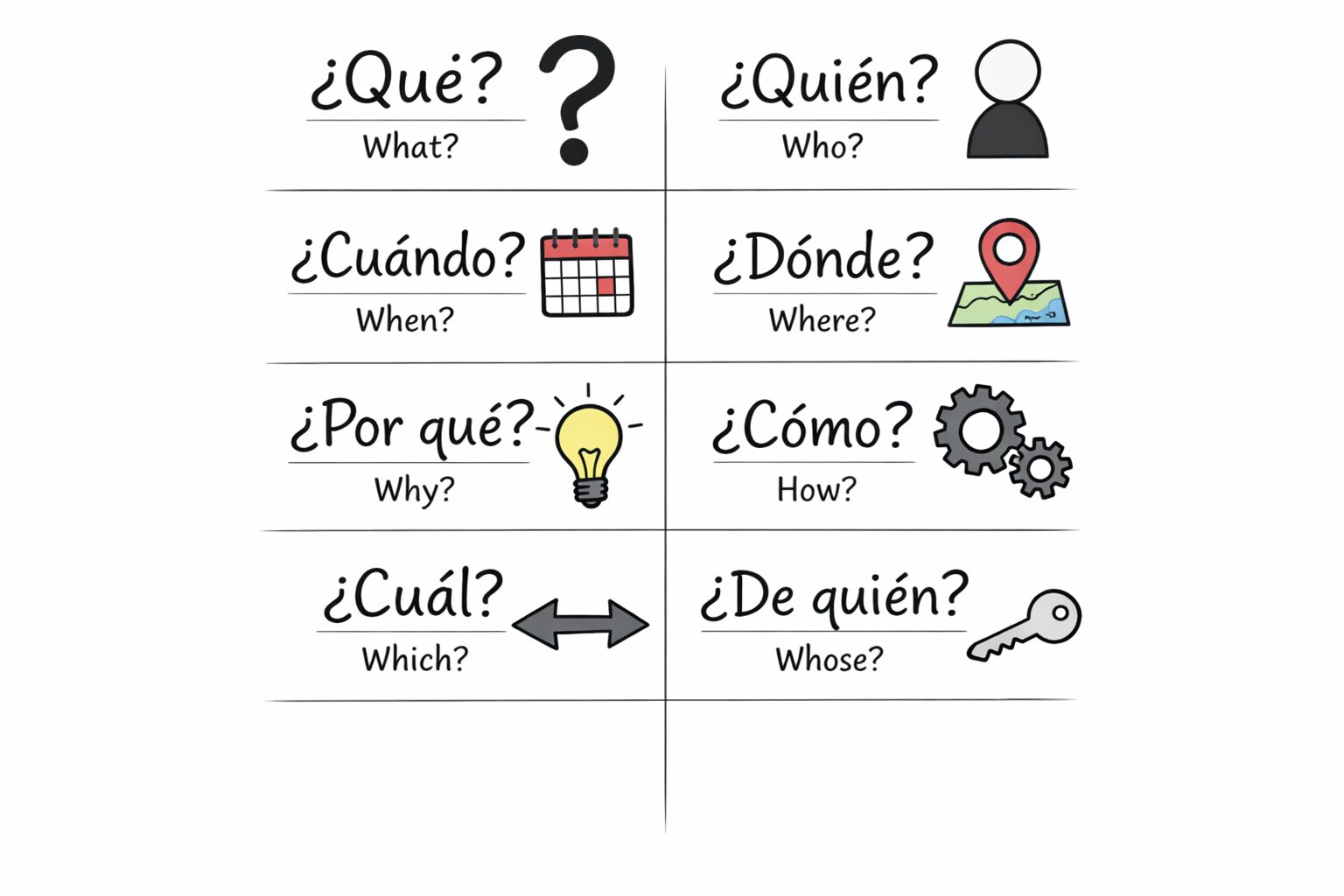
More infoQuestion words in Spanish (words like what, where, when, why, who, and how) are the keys to almost every conversation you’ll ever have. You use them dozens of times a day without thinking: “What’s that?”, “Where are we going?”, “ Why is it raining again?” If you want to ask about people, places, time, or reasons, you need to know how these words work. The good news is that Spanish question words work very similarly to English. The tricky part? A few of them (looking at you, ¿Qué? and ¿Cuál?) like to play by their own rules.
In this guide, we’ll cover every essential question word in Spanish, show you exactly how to use them with examples, and help you avoid the common mistakes that trip up learners. Plus, there’s a quiz at the end to test your skills.
Let’s dive in!
What in Spanish: ¿Qué?
Qué is used to ask for general information like things, ideas, definitions, time, etc.
Examples:
- What is that? – ¿Qué es eso?
- What did Juan say? – ¿Qué dijo Juan?
- What time is it? – ¿Qué hora es?
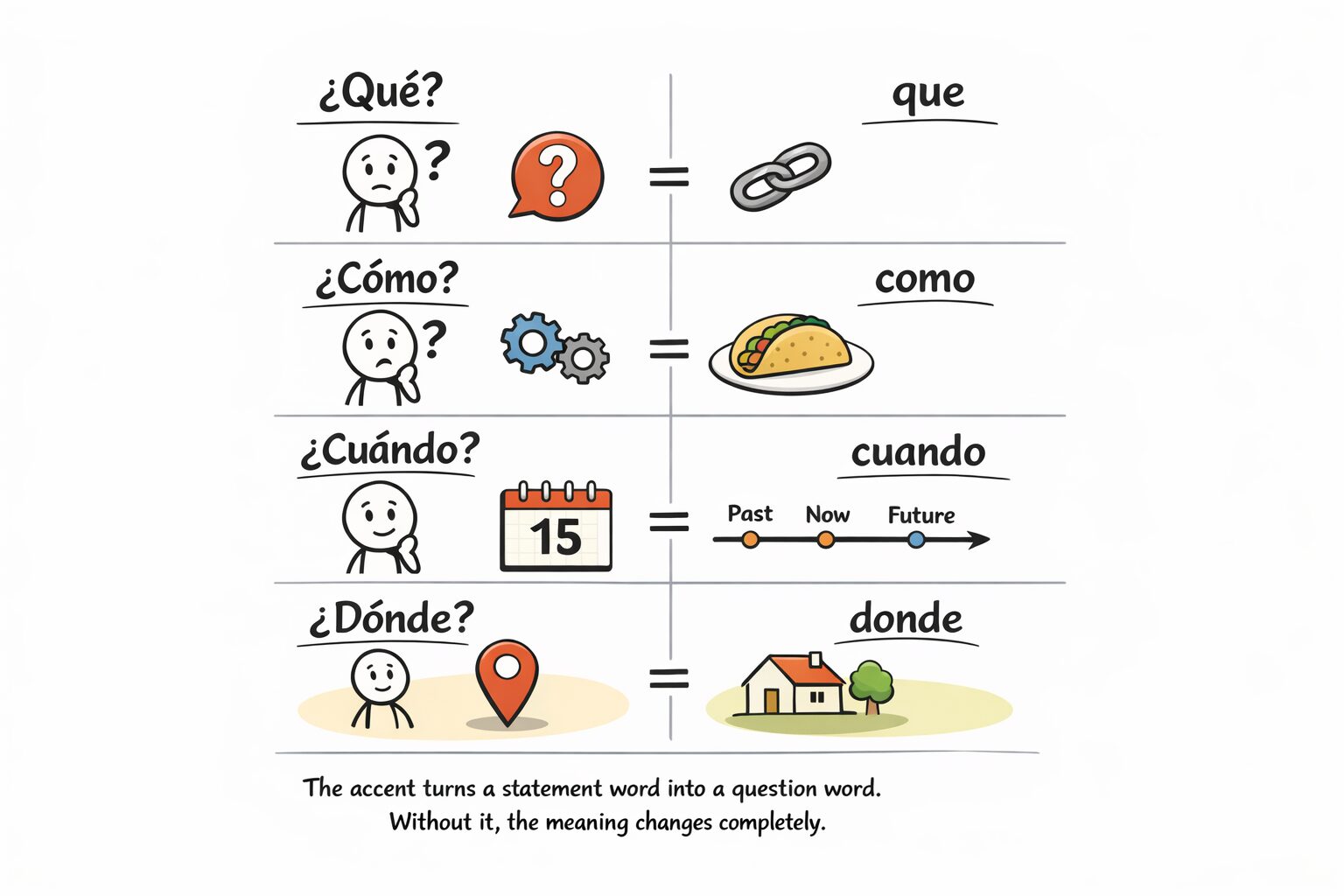
Important: All question words in Spanish have an accent mark: qué, cuál, cuándo, cómo, dónde, quién, por qué. The accent tells you it’s a question. Without the accent, these words serve different functions (e.g., que = “that”, como = “like/as”).
Which in Spanish: ¿Cuál / Cuáles?
¿Cuál? / ¿Cuáles? are used when you are choosing from a specific or implied set of options.
For example, when someone asks your name, you use cuál because Spanish treats it as choosing from an implied list of possible names.
A simple way to understand the difference:
- Use qué when you do not know what something is
- Use cuál when there is a set of possible options to choose from
Examples:
- Which is your coat? – ¿Cuál es tu abrigo?
- Which is your car? – ¿Cuál es tu carro?
- What is your favorite food? – ¿Cuál es tu comida favorita?
In Spanish, cuál is often used in situations where English would use “what,” especially when there is a choice involved.
The best way to get comfortable with this difference is through exposure and practice, since usage can vary depending on the context.
When in Spanish: ¿Cuándo?
¿Cuándo? is used to ask about time, dates, or specific moments.
Examples:
- When is your birthday? – ¿Cuándo es tu cumpleaños?
- When is Independence day? – ¿Cuándo es el día de la independencia?
- When are we going to go out? – ¿Cuándo vamos a salir?
How in Spanish: ¿Cómo?
Use ¿cómo? to ask about the way something is done, how it works, or to describe a person, situation, or condition.
Examples:
- How are you? – ¿Cómo estás?
- How’s the weather? – ¿Cómo está el clima?
TIP: ¿Cómo? can also be used to say “Sorry?” or “What?” when you didn’t hear something.
Where in Spanish: ¿Dónde?
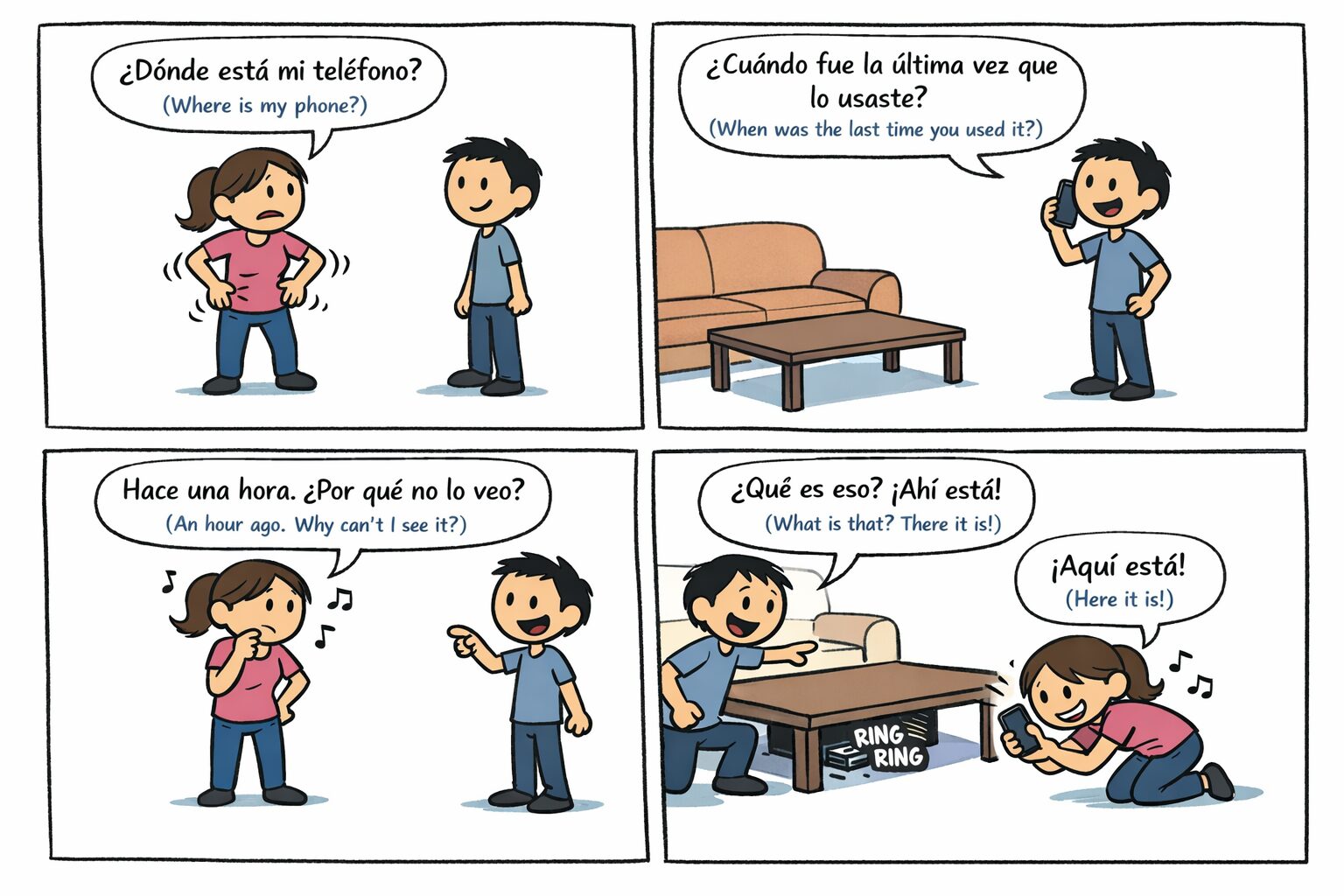
¿Dónde? works just like “where” in English: used for locations.
Examples:
- Where are you? – ¿Dónde estás?
- Where is the store? – ¿Dónde esta la tienda?
Who in Spanish: ¿Quién / Quienes?
Again, super easy! This is used exactly like “who” in English. Use ¿quién? (singular) and ¿quiénes? (plural) to ask about people.
Examples:
- Who is she? – ¿Quién es ella?
- Who’s at the door? – ¿Quién está en la puerta?
- Who are those people? – ¿Quiénes son esas personas?
Why / Because in Spanish: ¿Por qué? / Porque
This is one of the most important contrasts in question words in Spanish.
- ¿Por qué? (two words + accent) = why?
- Porque (one word, no accent) = because
Examples:
- Why are you sad? – ¿Por qué estás triste? / Because I’m sick – Porque estoy enfermo
- Why are you here? – ¿Por qué estás aquí? / Because I’m on vacation – Porque estoy de vacaciones.
A quick note on spacing: If you write porqué (one word, with an accent on the é), it means “the reason” and works as a noun, not a question word. The space matters because por qué (two words, accent on qué) asks a question (“why?”), while el porqué names the reason behind something. For example: No entiendo el porqué de tu enojo (I don’t understand the reason for your anger).
Whose in Spanish: ¿De quién / De quienes?
Use ¿de quién? to ask about possession (who something belongs to).
Examples:
- Whose house is that? – ¿De quién es esa casa?
- Whose TV is that? – ¿De quién es el televisor?
- Whose shoes are those? – ¿De quiénes son esos zapatos?
Spanish Question Words Quiz (With Answers)
Choose the correct question word in Spanish for each sentence:
- ¿__________ es tu fruta favorita? (___________is your favorite fruit?)
- ¿__________ es tu cumpleaños? (___________is your birthday?)
- ¿__________ están mis llaves? (_________are my keys?)
- ¿__________ estás tú? (________are you?)
- ¿__________ está Valentina feliz? (___________is Valentina happy?)
- ¿__________ es el presidente de los Estados Unidos? (_________is the president of the U.S?)
- ¿__________ color prefieres, verde o rojo? (__________color do you prefer, green or red?)
- ¿__________ es Navidad? (__________is Christmas?)
- ¿__________ es tu nombre? (___________is your name?)
- ¿__________ está el baño? (___________is the bathroom?)
- ¿__________ estás hoy? (_________are you today?)
- ¿__________ quieres comer? (_________do you want to eat?)
Key:
- Cuál (this is not “qué”, because there are potential answers that you are “choosing from”)
- Cuándo
- Dónde
- Cómo
- Por qué
- Quién
- Cuál
- Cuándo
- Cuál
- Dónde
- Cómo
- Qué
TIP: The best way to master question words in Spanish is through real exposure: listening, speaking, and seeing them used in context. Pay attention to how native speakers use qué vs. cuál, since that’s one of the trickiest distinctions.
Practice regularly, and these will quickly become second nature. ¡Sigue preguntando! (Keep asking!)